
Upon your arrival at Paro International Airport, the warm embrace of Bhutanese hospitality awaits you. A representative from Asian Tours and Travel will welcome you with a traditional ceremonial scarf known as a Khadhar, symbolizing goodwill, respect, and a heartfelt Bhutanese welcome. This special reception sets the tone for your journey, ensuring a smooth and pleasant transition as you are transferred to your designated destination. The Khadhar reflects Bhutan’s rich cultural traditions and marks the beginning of a memorable and enchanting experience with Asian Tours and Travel.
Visitor Information Centres in Bhutan
Bhutan ensures a welcoming arrival for visitors through dedicated visitor information centres. The Department of Tourism operates a central visitor information hub at Paro International Airport, offering orientation and assistance to travellers. Additional centres are located at Bhutan’s border entry points, providing convenient access to helpful travel information.
Currency Exchange
Currency exchange services are available to visitors upon arrival at Paro International Airport. Travellers can also exchange currency at banks, larger hotels, and authorized currency exchange businesses in Thimphu, making it convenient to convert foreign currency into the Bhutanese Ngultrum.
Cash Limit
Bhutan allows visitors to bring cash up to US$10,000, giving travellers flexibility to manage their financial needs during their stay. Visitors carrying higher amounts should check the latest customs declaration requirements before travelling.
Credit Cards and ATMs
Modern financial services are available in Bhutan, with ATMs and banks accepting international credit cards, particularly Visa and Mastercard. In urban areas, these cards are widely used, ensuring a convenient financial experience for travellers. The goBoB digital wallet app, launched by the Bank of Bhutan, also provides an additional option for digital transactions within the country.
Internet and Wi-Fi
Visitors can stay connected while travelling in Bhutan, as most hotels offer Wi-Fi services. For better data access and reliable internet connectivity, obtaining a visitor SIM card is recommended. Digital services such as the goBoB app further support convenient transactions and connectivity during your stay.
Visitor SIM Cards
To ensure seamless communication, visitors can purchase SIM cards from the visitor information centre at Paro International Airport, branches of Bhutan Telecom and TashiCell, and authorized agents in towns across Bhutan. This makes it easy for travellers to stay connected throughout their journey.
Dress Code
Bhutan welcomes visitors from around the world, but respectful attire is appreciated, especially when visiting religious sites, temples, monasteries, and Dzongs. Smart-casual clothing that covers the shoulders and knees is recommended, as it aligns with local customs and enhances the overall cultural experience.
Guide Requirement
Exploring Bhutan’s rich heritage is often best experienced with the support of a knowledgeable local guide, especially when visiting monuments, monasteries, temples, and Dzongs. Some sites may have entry fees, payable in cash or through available digital payment options. Travelling with a guide enhances your understanding of Bhutanese culture, history, and spiritual traditions.
Shopping for Handicrafts
Bhutan offers a vibrant shopping experience for visitors interested in authentic handicrafts. Places such as the Cottage and Small Industries Market, Centenary Farmers’ Market, Textile Museum shop, Tarayana, craft galleries, and OGOP shops showcase a wide range of locally made products. From traditional textiles to handmade crafts, these venues reflect Bhutan’s rich cultural heritage and artistic traditions.
Export Restrictions
Bhutan places great importance on preserving its cultural heritage. Regulations apply to the export of antiques, artefacts, and culturally significant items. Visitors may require an Export Permit for Non-Antique Artefacts to ensure compliance with preservation and customs regulations.
Customs Information
For a clear understanding of items that are prohibited, restricted, or declarable during departure, visitors are encouraged to refer to Bhutan’s official customs guidelines. This helps ensure a smooth and hassle-free departure process.
Drone Usage
Visitors who wish to capture Bhutan’s breathtaking landscapes using drones must obtain the necessary permits in advance. Whether for recreational or commercial purposes, drone usage in Bhutan is regulated, and travellers should seek official approval before operating any drone equipment.
Driving in Bhutan
Visitors driving their own vehicles in Bhutan are encouraged to travel with the guidance and support of an accredited guide. Pre-booking guide services before arrival at the borders helps ensure a smooth, safe, and enriching journey through Bhutan’s diverse landscapes and cultural landmarks.
Route Permits
General travel requirements within Bhutan have become more convenient for visitors, and route permits are no longer mandatory for regular tourist travel. However, individuals visiting for business or official purposes may still need to obtain route permits depending on the nature of their visit.
National Park Permits
Travellers wishing to explore Bhutan’s national parks and protected natural areas may need to obtain the required permits. These permits help support conservation efforts and ensure a responsible and compliant experience while discovering Bhutan’s pristine landscapes.
Tipping in Bhutan
Tipping is not traditionally part of Bhutanese culture and is not obligatory. However, it has become more common in the service industry due to international tourism. While tipping is not mandatory, it is appreciated as a gesture of gratitude for good service. Visitors may choose to offer a modest tip to restaurant staff, hotel staff, guides, or drivers. The amount is entirely at your discretion and should be given as a respectful expression of appreciation.
Accommodation
Asian Tours and Travel works with trusted accommodation providers to ensure a comfortable and memorable stay for visitors to Bhutan. Our accommodation options are selected to suit different travel styles and preferences, from certified homestays that offer authentic cultural experiences to quality hotels included in comprehensive travel packages. For trekking adventures, fully serviced tents provide a close connection with nature, while travellers seeking luxury can choose premium five-star accommodation surrounded by Bhutan’s stunning landscapes.
Bhutanese Cuisine
Bhutanese cuisine offers a rich variety of traditional dishes known for their bold and unique flavours. From the fiery taste of Ema Datshi, a beloved dish made with chili and cheese, to the savoury richness of Phaksha Paa, momos, and Jasha Maru, Bhutan’s food culture is a memorable part of the travel experience. Alongside local cuisine, Bhutan also offers cafes and restaurants serving international dishes, giving travellers a delightful blend of traditional and global flavours.
Cultural and Entertainment Experiences
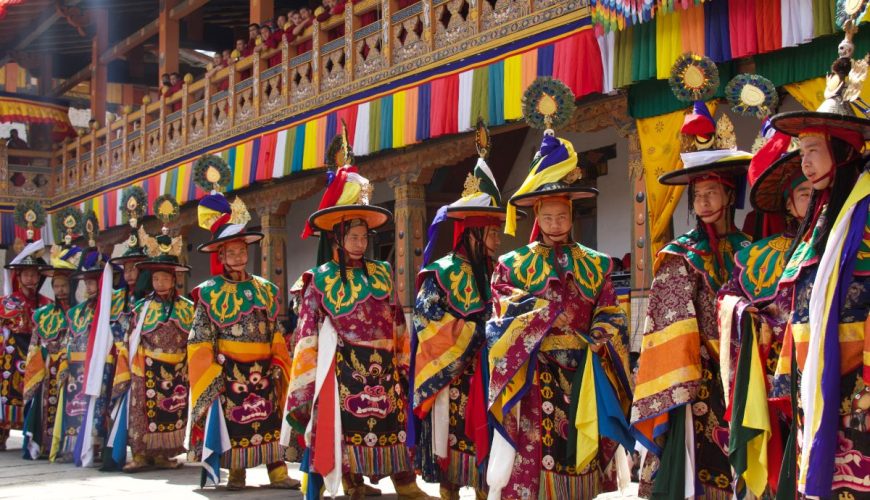
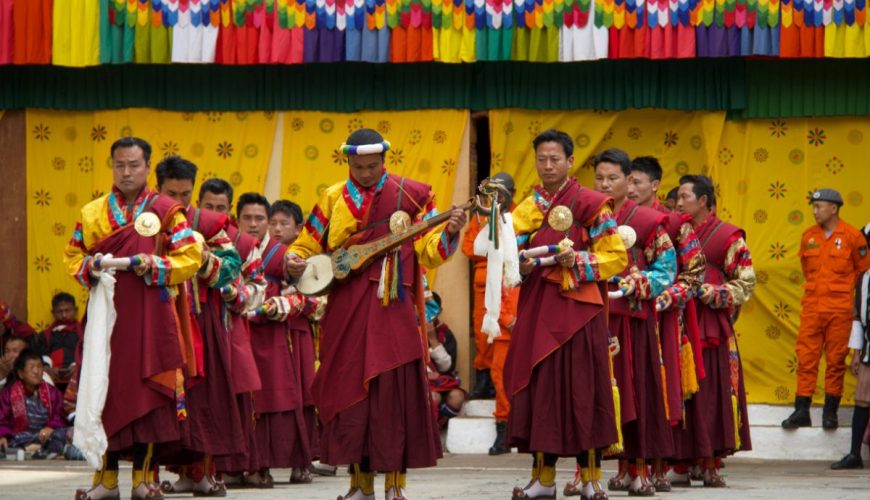
Immerse yourself in Bhutan’s rich cultural heritage through traditional folk dances, music, mask dances, and local entertainment that reflect the soul of the nation. Visitors can experience Bhutan’s national sport of archery, try the traditional Khuru dart game, and enjoy Ara tasting, an opportunity to savour a local Bhutanese beverage. These cultural experiences can be arranged at an additional cost, offering travellers a deeper and more memorable connection with Bhutanese traditions.
Travel Etiquette
Bhutan is a Vajrayana Buddhist country with many sacred religious sites. Visitors are encouraged to respect local customs by maintaining silence at sacred places, avoiding disruption of religious practices, and dressing modestly when entering temples, monasteries, and Dzongs. Long sleeves and clothing that covers the legs are recommended, and shoes should be removed before entering temples.
When meeting elders or visiting sacred places, removing caps is considered respectful. Visitors should also ask for permission before taking photographs of people or religious spaces. Bhutan’s natural environment is deeply valued, so travellers are encouraged to protect the ecosystem, avoid hunting or fishing, and follow the guidance of accredited guides when exploring the wilderness.
Simple local greetings such as “Kuzu zangpo la” for hello and “Kadinche” for thank you are warmly appreciated. Above all, embrace Bhutanese hospitality with kindness, respect, and a smile.

Comment (0)